



Repair Matrix – Start
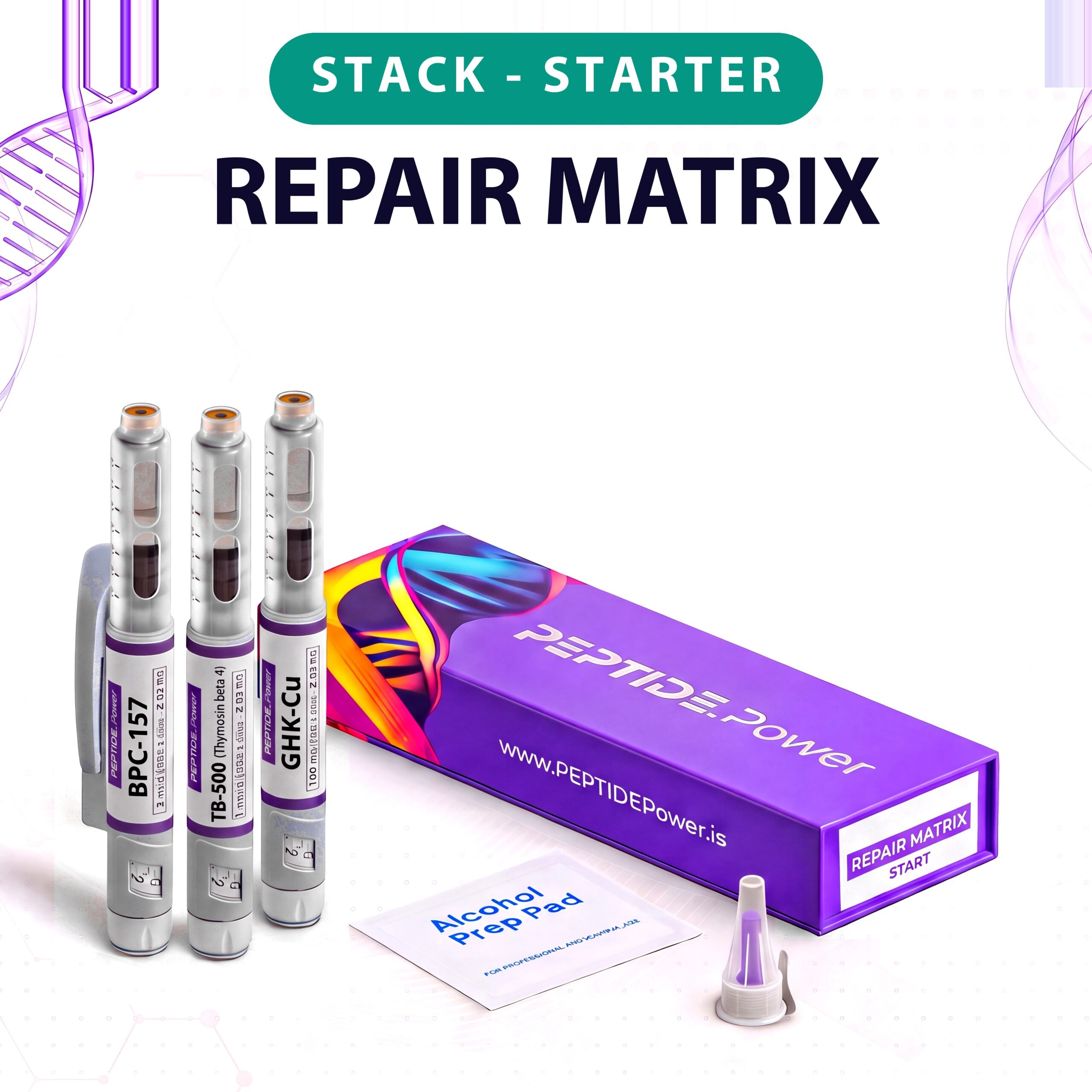
The Repair Matrix – Start is a focused three-part recovery research stack pairing the systemic repair peptides BPC-157 and TB-500 with the copper peptide GHK-Cu.
Curated for laboratory study of angiogenesis, connective-tissue repair and skin/collagen remodeling – three complementary research compounds in one set, bundled below their combined individual price.
$211.99 Original price was: $211.99.$179.99Current price is: $179.99.
A 3-part tissue-repair research stack: BPC-157, TB-500 and the copper peptide GHK-Cu.
What's included in this stack


Repair Matrix - Start - Focused Tissue-Repair Research Stack
via BPC-157, TB-500
by BPC-157, TB-500, GHK-Cu
BPC-157, TB-500, GHK-Cu
BPC-157 mucosal integrity
BPC-157 neuronal regeneration
via TB-500 G-actin polymerization
GHK-Cu gene expression reversion
GHK-Cu collagen, elastin boost
Description
Mechanism of Action
This research bundle investigates complementary mechanisms of tissue repair. BPC-157 is studied for angiogenesis, growth-factor expression and gut-lining and tendon repair, while TB-500 is researched for actin regulation, cell migration and systemic regeneration. GHK-Cu is investigated for collagen and extracellular-matrix remodeling and antioxidant signaling, together exploring complementary effects on structural recovery and tissue integrity in research models.
Benefits
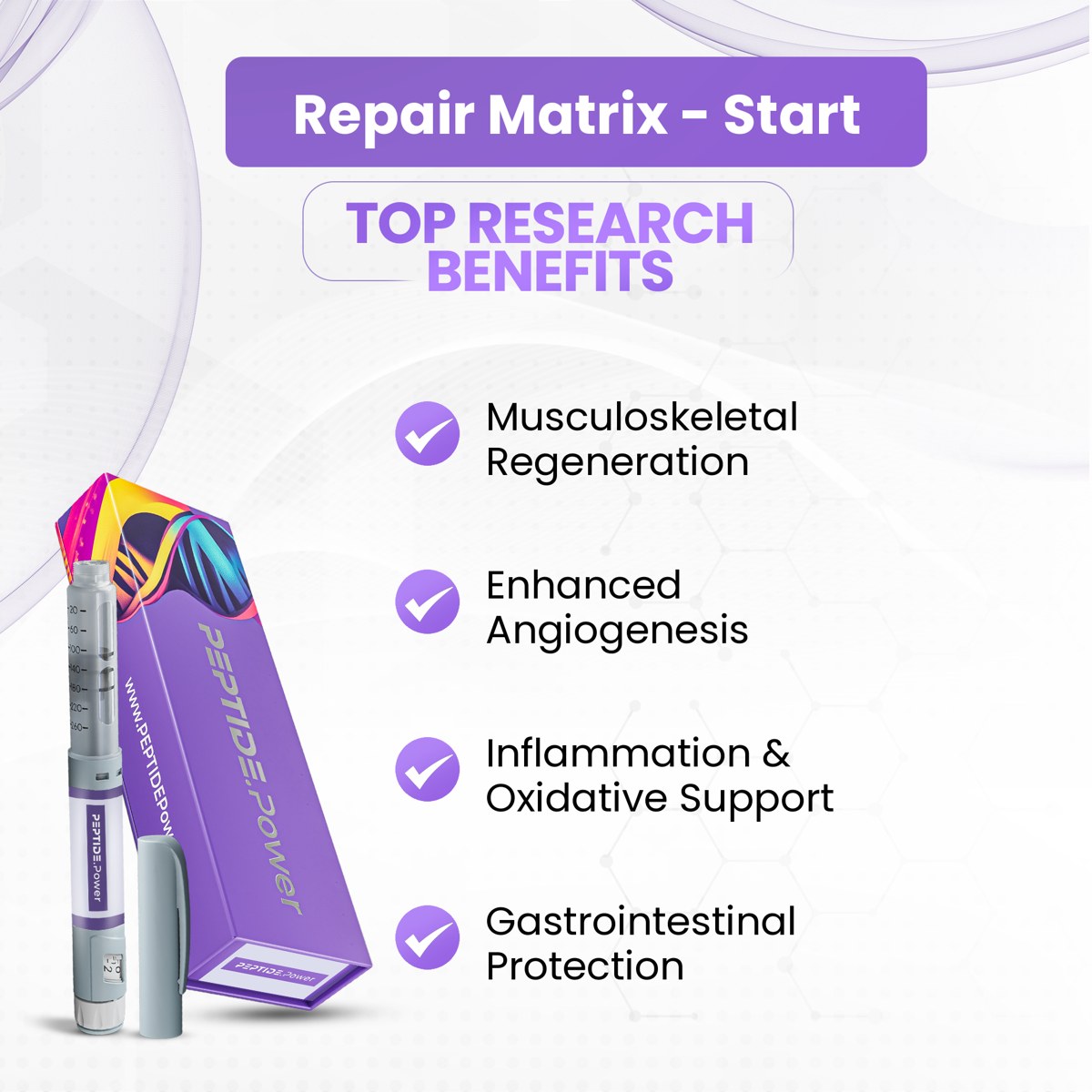
- Musculoskeletal Regeneration – BPC-157 and TB-500 are studied for accelerating the repair of muscles, tendons, ligaments, and bones in experimental models.
- Enhanced Angiogenesis – BPC-157, TB-500, and GHK-Cu are researched for promoting new blood vessel formation and improving nutrient delivery to damaged tissues.
- Inflammation & Oxidative Support – BPC-157, TB-500, and GHK-Cu are investigated for reducing inflammatory markers and enhancing antioxidant enzyme activity.
- Gastrointestinal Protection – BPC-157 is studied for preserving mucosal integrity and accelerating epithelial regeneration in experimental models of gastrointestinal injury.
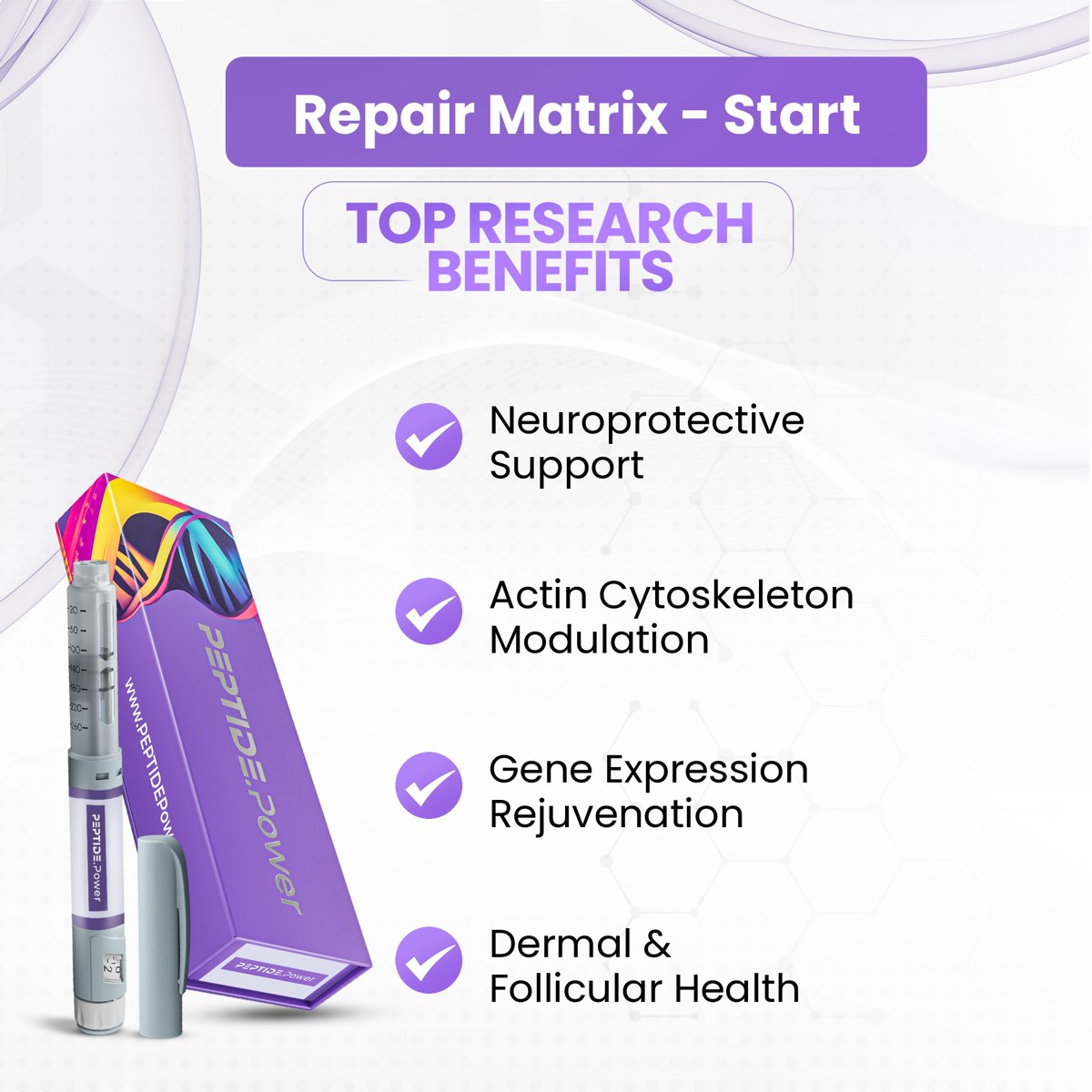
- Neuroprotective Support – BPC-157 is researched for enhancing neuronal regeneration and functional recovery following peripheral nerve injury or brain trauma in preclinical studies.
- Actin Cytoskeleton Modulation – TB-500 is investigated for its role in regulating G-actin polymerization, which is essential for cell movement and structural repair processes.
- Gene Expression Rejuvenation – GHK-Cu is studied for its ability to revert gene expression profiles of aged cells to a more youthful state, influencing growth and repair pathways.
- Dermal & Follicular Health – GHK-Cu is researched for stimulating collagen and elastin production, improving skin texture, and promoting hair follicle activity.
Research Data
BPC-157
| Study / Model | Reported effect |
| Rat Achilles tendon transection | Accelerated tendon reattachment and increased collagen fiber density. |
| Gastrointestinal ulcer models (rats) | Rapid restoration of mucosal lining and epithelial integrity. |
| Muscle injury (crush and transection) | Enhanced angiogenesis and muscle fiber regeneration. |
| Peripheral nerve crush model | Improved axonal outgrowth and functional nerve recovery. |
| Liver toxicity (ethanol/NSAID models) | Reduced hepatocellular necrosis and oxidative stress. |
| Vascular injury models | Stimulated angiogenic repair and normalized blood vessel architecture. |
| Joint and ligament repair | Promoted fibroblast activity and accelerated tendon-to-bone healing. |
TB-500 (Thymosin beta 4)
| Study / Model | Reported effect |
|---|---|
| Rat full-thickness skin wound model | ↑ Wound closure rate, ↑ keratinocyte migration, accelerated re-epithelialization |
| Murine cardiac infarction model | ↓ Scar formation, ↑ cardiomyocyte survival and epicardial progenitor activation |
| Rat Achilles tendon injury | ↑ Collagen fiber organization and tensile strength during repair phase |
| Corneal injury models (rabbit) | Accelerated epithelial regeneration and reduced inflammatory infiltrate |
| In vitro endothelial cell culture | ↑ Angiogenic tube formation and VEGF-mediated vascular sprouting |
| Murine CNS injury model | ↑ Oligodendrocyte differentiation and neurological functional recovery |
| Skeletal muscle crush injury (rat) | ↑ Satellite cell activation, ↓ fibrotic tissue deposition |
GHK-Cu
| Study / Model | Reported effect |
| Human dermal fibroblast culture | ↑ Collagen and elastin synthesis; enhanced wound closure rate. |
| In vivo wound model (rats) | Accelerated epithelial repair and angiogenesis. |
| Gene expression profiling (human skin) | Activation of >400 regenerative genes, suppression of inflammatory markers. |
| Hair follicle cell culture | ↑ Anagen phase duration; increased dermal papilla cell proliferation. |
| UV-damaged skin model | ↓ oxidative stress and apoptosis; ↑ SOD and catalase activity. |
| Topical and subQ administration (clinical) | Improved elasticity, firmness, and wrinkle depth reduction. |
| In vitro antioxidant assays | Cu(II) chelation reduces reactive oxygen species (ROS). |
Stack Suggestions
This research bundle is suited for investigators exploring entry-level tissue-repair protocols, particularly the interplay between angiogenesis, connective-tissue regeneration and extracellular-matrix remodeling.
Pen Dosage Chart
BPC-157
| BPC-157 Pen 5 mg | |
| Volume | 2.0 mL |
| mg/mL | 2.5 mg/mL |
| Click-to-Dose | 1 click = 0.025 mg |
| Example(s) | 10 clicks = 0.25 mg |
| BPC-157 Pen 10 mg | |
| Volume | 2.0 mL |
| mg/mL | 5 mg/mL |
| Click-to-Dose | 1 click = 0.05 mg |
| Example(s) | 10 clicks = 0.50 mg |
TB-500 (Thymosin beta 4)
| TB-500 Pen 5 mg | |
|---|---|
| Volume | 2.0 mL (after reconstitution) |
| mg/mL | 2.5 mg/mL |
| Click-to-Dose | 1 click = 0.025 mg |
| Example(s) | 20 clicks = 0.5 mg; 40 clicks = 1 mg |
| TB-500 Pen 10 mg | |
|---|---|
| Volume | 2.0 mL (after reconstitution) |
| mg/mL | 5.0 mg/mL |
| Click-to-Dose | 1 click = 0.05 mg |
| Example(s) | 20 clicks = 1 mg; 40 clicks = 2 mg |
GHK-Cu
| GHK-Cu 100 mg | |
| Volume | 2.0 mL |
| mg/mL | 50 mg/mL |
| Click-to-Dose | 1 click = 0.50 mg |
| Example(s) | 10 clicks = 5 mg |
Dosage & Protocols Variations
BPC-157
Standard Research Protocol
- Dose: 0.2 – 0.4 mg (variant 5 mg pen = 8-16 clicks / variant 10 mg pen = 4-8 clicks)
- Duration: 2 – 4 weeks
- Frequency: Daily
- Cycle Interval: 2 – 4 weeks off before repeating
- Goal / Description: Common dose for general recovery models.
Therapeutic Research Protocol
- Dose: 0.5 – 0.75 mg (variant 5 mg pen = 20-30 clicks / variant 10 mg pen = 10-15 clicks)
- Duration: 4 – 6 weeks
- Frequency: Daily
- Cycle Interval: 4 weeks off before next cycle
- Goal / Description: Used in muscle or tendon repair studies.
Biohacker Protocol (experimental)
- Dose: 0.25 mg (variant 5 mg pen = 10 clicks / variant 10 mg pen = 5 clicks)
- Duration: Continuous
- Frequency: Daily
- Cycle Interval: Daily
- Goal / Description: Microdose for systemic recovery studies.
Stacked Protocol (BPC + TB-500)
- Dose: 0.25 mg + 0.25 mg (variant 5 mg pen = 10 clicks / variant 10 mg pen = 5 clicks)
- Duration: 4 weeks
- Frequency: 5× per week
- Cycle Interval: 2 – 3 weeks off between stacked cycles
- Goal / Description: Combined recovery and angiogenesis model.
TB-500 (Thymosin beta 4)
Standard Research Protocol
- Dose: 2 – 2.5 mg (variant 5 mg pen = 80-100 clicks / variant 10 mg pen = 40-50 clicks)
- Duration: 4 – 6 weeks
- Frequency: 2× per week
- Cycle Interval: 4 weeks off before repeating
- Goal / Description: Baseline protocol for systemic tissue repair and recovery research models.
Therapeutic Research Protocol
- Dose: 5 – 10 mg (variant 10 mg pen = 100-200 clicks)
- Duration: 4 – 6 weeks loading, then taper
- Frequency: Split into 2 – 3 weekly injections
- Cycle Interval: 4 – 6 weeks off before repeating
- Goal / Description: Higher-dose protocol used in connective tissue and musculoskeletal injury models.
Stacked Protocol (TB-500 + BPC-157)
- Dose: 2 mg TB-500 + 0.25 mg BPC-157 (variant 5 mg pen = 80 clicks / variant 10 mg pen = 40 clicks)
- Duration: 4 weeks
- Frequency: TB-500 2× weekly, BPC-157 daily
- Cycle Interval: 4 weeks off before repeating
- Goal / Description: Combined regenerative protocol investigated for synergistic tendon and ligament repair.
GHK-Cu
Standard Research Protocol
- Dose: 2 – 5 mg (= 4-10 clicks)
- Duration: 2 – 4 weeks
- Frequency: Daily
- Cycle Interval: 2-week pause
- Goal / Description: Used for baseline collagen and regeneration studies.
Therapeutic Research Protocol
- Dose: 5 – 10 mg (= 10-20 clicks)
- Duration: 4 – 8 weeks
- Frequency: 3 – 5× per week
- Cycle Interval: 4 weeks off
- Goal / Description: For advanced skin, wound, or hair research.
Biohacker Protocol
- Dose: 1 – 2 mg (= 2-4 clicks)
- Duration: 30 days
- Frequency: Daily
- Cycle Interval: Repeat monthly
- Goal / Description: Used for anti-aging and repair model observation.
Possible Side Effects
This bundle combines multiple research compounds; the per-compound safety notes below apply. For laboratory research use only – not for human consumption.
BPC-157
BPC-157 is generally well-tolerated in animal and limited human studies.
Reported side effects are rare and mild:
- Localized irritation or redness at injection site.
- Mild fatigue during initial dosing period.
- Transient headache or digestive sensitivity in sensitive subjects.
No evidence of hormonal, hepatic, or systemic adverse effects has been observed in available data.
TB-500 (Thymosin beta 4)
TB-500 is generally well-tolerated in animal studies and limited human observational reports.
Reported side effects in research contexts are uncommon and typically mild:
- Localized redness, tenderness, or irritation at the injection site.
- Transient fatigue or lethargy during the initial dosing period.
- Mild headache or lightheadedness reported in some subjects.
- Temporary flu-like sensations shortly after administration.
- Occasional digestive sensitivity or mild nausea.
No evidence of hormonal, hepatic, or systemic adverse effects has been observed in available preclinical data. As TB-500 is studied for its angiogenic and cell-migration properties, ongoing research continues to evaluate its long-term safety profile in experimental models.
GHK-Cu
GHK-Cu has been generally well-tolerated in research and cosmetic studies.
Mild redness, itching, or warmth may occur at the injection site due to copper’s vascular effects.
High concentrations in topical form may cause temporary skin irritation or dryness.
No systemic toxicity has been reported in human or animal studies.
Side effects are dose-dependent and typically resolve quickly after application adjustment.
Product Attributes
Scientific References
BPC-157
- Emerging use of BPC-157 in orthopaedic sports medicine Animal | In vitro
- BPC-157 benefits, dosage, and side effects Observational | Animal | In vitro
- BPC 157: science-backed uses, benefits, dosage, and safety Observational | Animal | In vitro
- Pentadecapeptide BPC 157 enhances the growth hormone receptor expression Animal | In vitro
- Multifunctionality and possible medical application of the BPC 157 peptide Observational | Animal | In vitro
- BPC-157: miracle healing peptide or hidden danger? Observational | Animal | In vitro
- Stable gastric pentadecapeptide BPC 157: protective effects and healing mechanisms Animal | In vitro
- What is BPC-157? everything to know about this peptide Observational | Animal | In vitro
- The science of BPC-157 supplements Observational | Animal | In vitro
- What science actually says about BPC 157 benefits Observational | Animal | In vitro
TB-500 (Thymosin beta 4)
- Thymosin beta4: a multi-functional regenerative peptide. Basic properties and clinical applications Observational | Animal | In vitro
- Thymosin beta4 and cardiac regeneration: are we missing a beat? Animal | In vitro
- Thymosin beta4 induces angiogenesis through Notch signaling in endothelial cells Animal | In vitro
- Thymosin beta4 promotes cardiac cell survival and tissue repair Animal | In vitro
- Thymosin beta4 activates integrin-linked kinase and promotes cardiac cell migration, survival and cardiac repair Animal | In vitro
- Thymosin beta4 and tissue regeneration: a review of its therapeutic potential in wound healing Observational | Animal
- Thymosin beta-4: a multi-faceted tissue repair stimulating protein in heart injury Animal | In vitro
- Thymosin beta4 in the eye: from bench to bedside Observational | Animal | In vitro
GHK-Cu
- Expression of glycosaminoglycans and small proteoglycans in wounds: modulation by the tripeptide-copper complex glycyl-L-histidyl-L-lysine-Cu2+ Animal
- The human tripeptide GHK-Cu in prevention of oxidative stress and inflammatory conditions Review
- Regenerative and protective actions of the GHK-Cu peptide in the light of the new gene data Review
- The potential of GHK as an anti-aging peptide Review
- GHK peptide as a natural modulator of multiple cellular pathways in skin regeneration Review
- Thermodynamically stable ionic liquid microemulsions pioneer pathways for topical delivery and peptide retention In vitro
- Exploring the beneficial effects of GHK-Cu on an experimental model of DSS-induced ulcerative colitis in mice Animal
- The human tri-peptide GHK and tissue remodeling Review
- The tripeptide-copper complex glycyl-L-histidyl-L-lysine-Cu2+ stimulates matrix metalloproteinase-2 expression by fibroblast cultures In vitro
- In vivo stimulation of connective tissue accumulation by the tripeptide-copper complex glycyl-L-histidyl-L-lysine-Cu2+ in rat experimental wounds Animal
Included In The Box
Every product arrives in a premium, custom-designed PEPTIDE.Power box, engineered for convenience, hygiene, and safe storage in your refrigerator. Inside, you will find everything needed for your full research protocol:
- 1× Disposable Pre-Mixed Injection Pen
- Powered by our proprietary PSM Technology™: precision stabilization & mixing system for consistent potency
- 10× Ultra-thin Needles (33G, 4 mm)
- 10× Alcohol Pads for sterile preparation
- Internal Stabilizing Foam Insert to prevent shaking during transport
- Instruction Panel printed on the inside of the box for quick reference
- Security Seal Sticker ensuring the package has not been opened or tampered with
Storage
Store the product in a refrigerator at 1-8°C immediately upon delivery. To maintain optimal stability, keep the pen away from light, and do not expose it to repeated temperature changes.
Once reconstituted (all our pens come pre-mixed), research compounds remain stable for 6-8 weeks under proper refrigeration.
Do not freeze after reconstitution. Always keep the box closed so the pen, needles, and alcohol pads stay clean and protected.
For best results, use the product consistently within the recommended time window and always follow your research protocol.
Delivery
We ship with Next-Day EU Delivery via DHL Express or UPS Express.
All orders are prepared fresh on the day of dispatch, placed in EPS Cold-Chain Transport Boxes, and shipped with cooling elements to maintain a stable temperature throughout the journey.
Our logistics process is designed so the package arrives overnight, avoiding customs delays inside the European Union.
Products are shipped from our EU facility, ensuring no import duties, no customs clearance, and always fast and secure delivery.
Payment
Due to the nature of research peptides and the high-risk category assigned by payment processors, credit card companies do not generally support merchants in this field.
For this reason, we accept mainly Bank Transfers.
We also work with a crypto payment provider, and from time to time, card payments may be available depending on processor availability.
Within the European Union, SEPA transfers are fast, low-cost, and usually arrive within minutes to a few hours, making the payment process smooth and simple.
Once the transfer is received, your order is prepared immediately and dispatched the same day, depending on the daily cut-off time.
Please note that we do not dispatch shipments on Fridays or on days before official public holidays. This is done to ensure that parcels can be delivered on the next working day and are not held in transit over weekends or holidays.
This method ensures compliance, security, and continuity of service for all customers across the EU.
Didn't find the answer to your question?
View all frequently asked questionsRELATED PRODUCTS


Blend Tesamorelin + Ipamorelin
Tesamorelin + Ipamorelin is a research blend combining a GHRH analog with a selective GHRP, investigated for its synergistic stimulation of endogenous growth hormone release. It is studied in experimental models for effects on body composition, lipolysis, and IGF-1 modulation without significant cortisol or prolactin elevation.


BPC-157


BPC-157 + TB-500


FOXO4-DRI (Proxofim)

