



GHRP-2
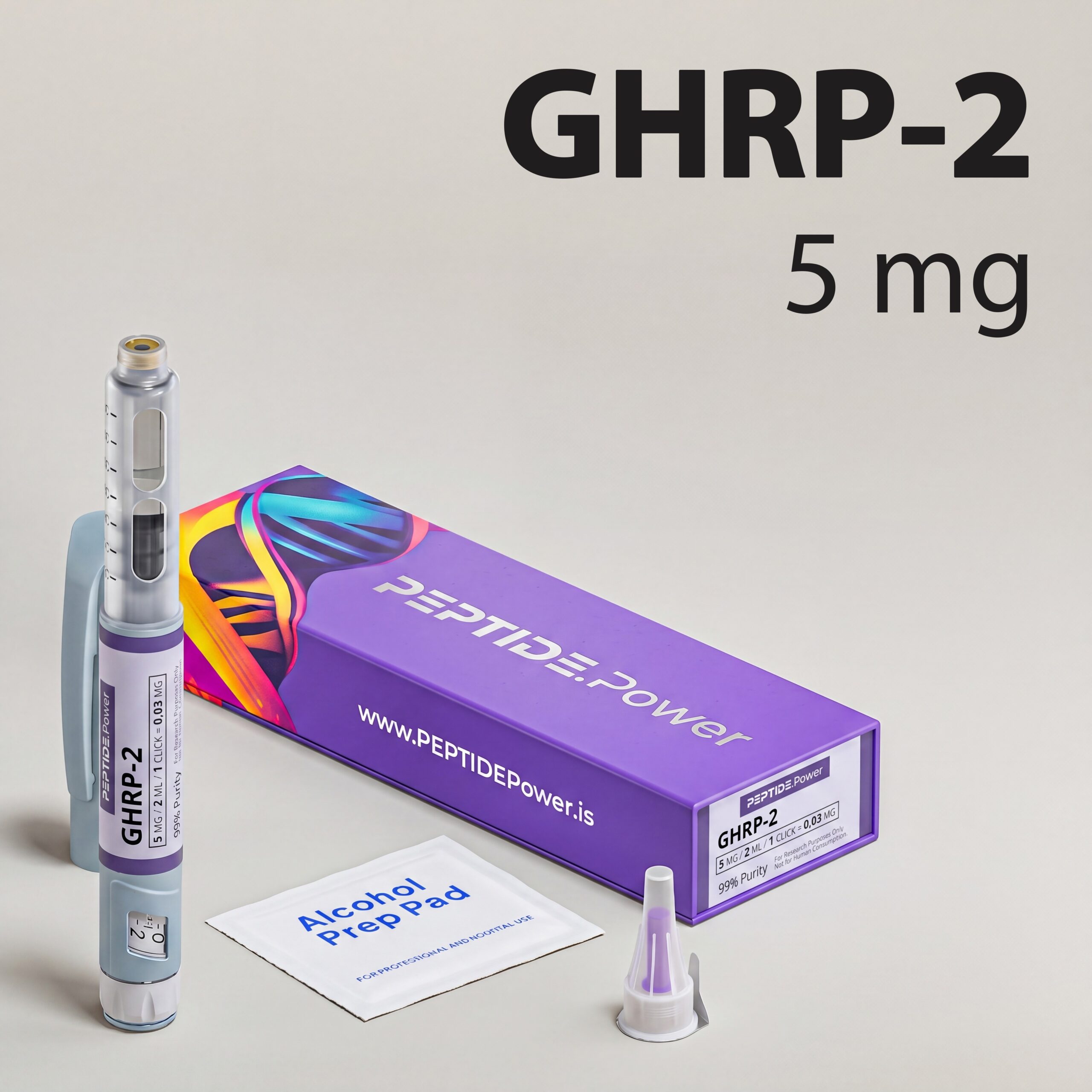
GHRP-2 is a growth hormone releasing peptide studied for its role in stimulating endogenous growth hormone secretion through activation of the ghrelin receptor (GHS-R1a). It is known for producing stronger GH pulses compared to earlier secretagogues. In research settings, GHRP-2 has been observed to support anabolic hormone activation, metabolic signaling, and recovery-related endocrine pathways. Formulated in a stabilized pre-mixed injection pen for research use only.
Quality Certificates
Independent third-party lab analysis (CoA) - from our own in-house brand.
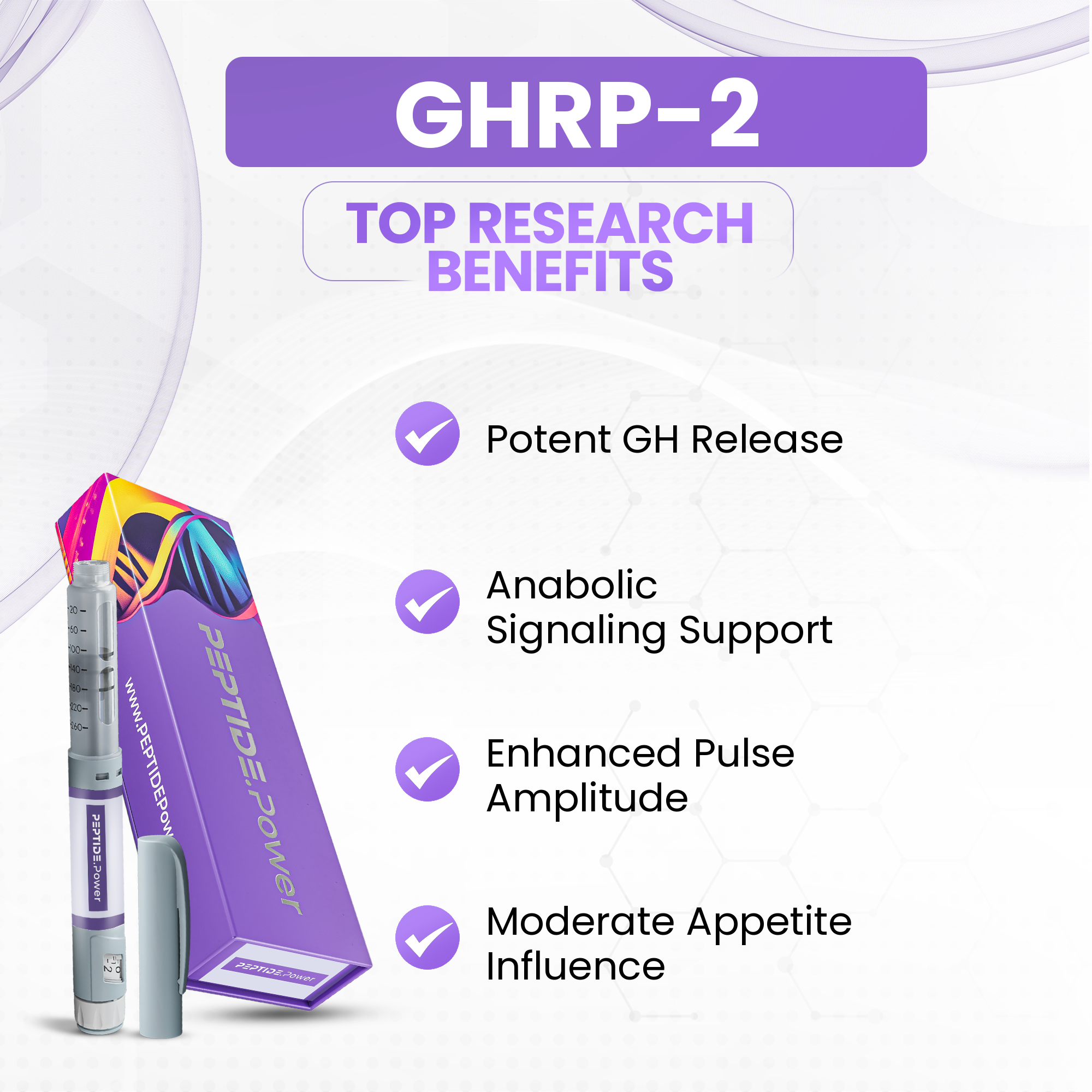
GHRP-2 - Potent Growth Hormone Release & Anabolic Signaling
Amplifies endogenous growth hormone pulses
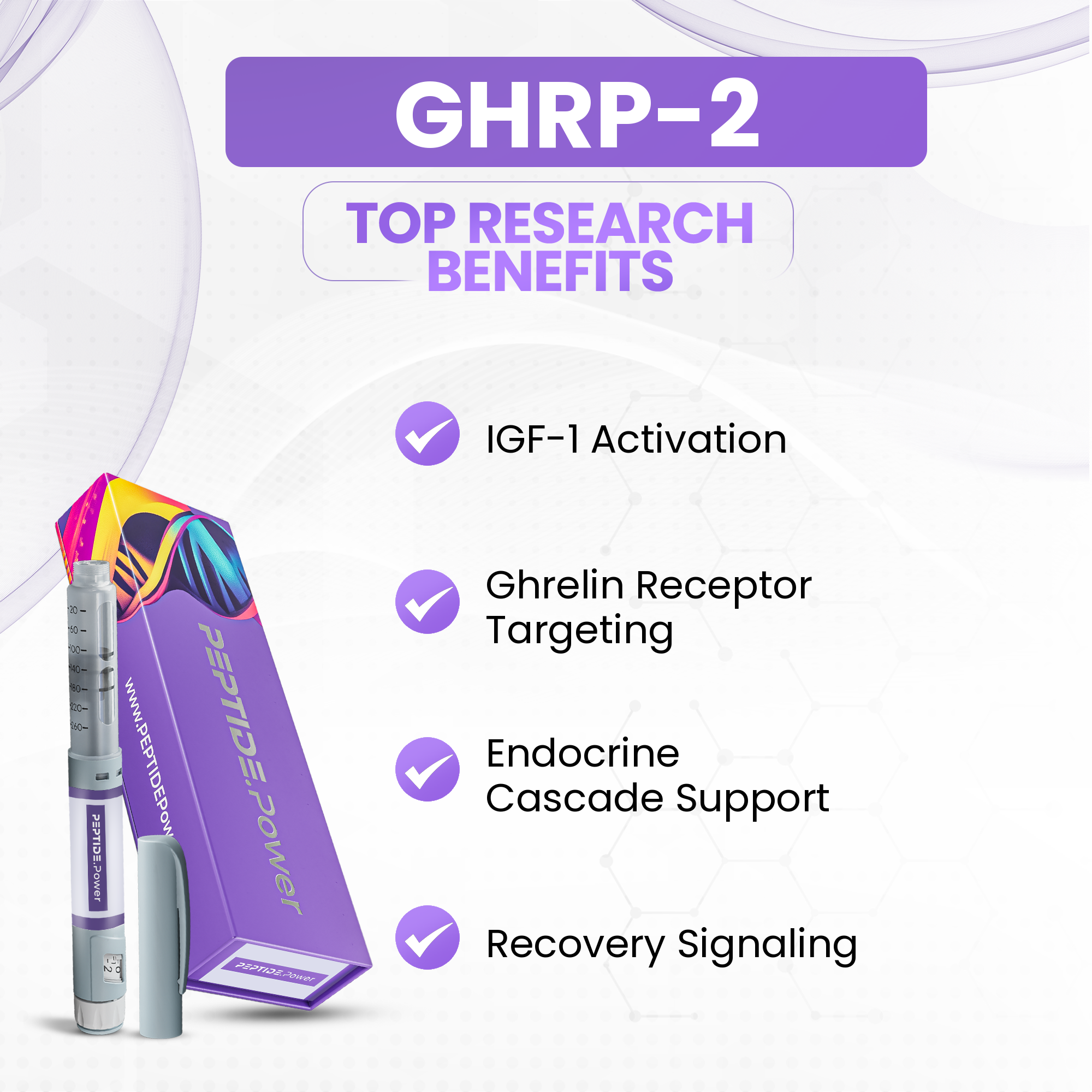
Activates GH–IGF pathway
Increases GH secretion intensity
Engages ghrelin-related pathways
Influences downstream anabolic signals
Activates GHS-R1a signaling
Engages hypothalamic-pituitary axis
Supports tissue repair pathways
Description
GHRP-2 is a synthetic ghrelin mimetic peptide belonging to the growth hormone releasing peptide family. It binds to the growth hormone secretagogue receptor (GHS-R1a), stimulating pulsatile release of growth hormone from the anterior pituitary. Compared to GHRP-6, GHRP-2 is generally considered more potent in stimulating GH secretion with relatively reduced appetite stimulation.
In preclinical and exploratory human research, GHRP-2 has been studied for its ability to increase circulating growth hormone and influence downstream IGF-1 signaling. Activation of ghrelin receptors in the hypothalamus and pituitary integrates endocrine output with metabolic regulation pathways.
Clinical Status
Human RCT ▣ | Observational ▣ | Animal ✔ | In vitro ✔
Primarily studied in preclinical and exploratory human growth hormone modulation research contexts.
Mechanism of Action
GHRP-2 binds to the growth hormone secretagogue receptor (GHS-R1a), a G-protein, coupled receptor expressed on hypothalamic neurons and pituitary somatotroph cells. Receptor activation triggers intracellular calcium signaling and phospholipase C pathways, leading to growth hormone exocytosis. In the hypothalamus, GHRP-2 may influence neuropeptide Y and growth hormone, releasing hormone (GHRH) neurons, enhancing the amplitude of GH pulses.
Compared to GHRP-6, GHRP-2 demonstrates stronger GH release with relatively less pronounced appetite stimulation. Elevated GH stimulates hepatic IGF-1 production, which activates PI3K/Akt/mTOR signaling cascades involved in protein synthesis and cellular growth. Broader endocrine effects, including mild ACTH stimulation, have been observed in experimental settings due to ghrelin receptor cross-talk within hypothalamic networks.
Benefits
- Generates high-amplitude growth hormone pulses:
GHRP-2 is recognized for producing stronger growth hormone peaks compared to earlier GHRPs. By binding to the GHS-R1a receptor, it increases intracellular calcium signaling within pituitary somatotroph cells, triggering GH exocytosis. The resulting hormone release follows a pulsatile rhythm rather than constant elevation. Higher pulse amplitude is associated with stronger downstream IGF-1 signaling in experimental models. This amplified pulsatility differentiates GHRP-2 from milder secretagogues and supports its positioning in anabolic hormone research. - Enhances the GH, IGF-1 endocrine cascade:
Once GH is released, it stimulates hepatic production of IGF-1. IGF-1 then activates the PI3K/Akt pathway, leading to mTOR engagement and increased protein synthesis. Through this cascade, GHRP-2 indirectly influences cellular growth and structural adaptation. The sequential endocrine layering preserves physiological hierarchy, ensuring that peripheral tissues respond to naturally released hormones rather than direct receptor agonism. - Strong ghrelin receptor affinity and dual-site activation:
GHRP-2 binds to ghrelin receptors expressed both in the hypothalamus and pituitary. Hypothalamic activation enhances GHRH neuron activity while suppressing somatostatin tone, which normally inhibits GH release. Simultaneously, pituitary receptor activation directly stimulates hormone secretion. This coordinated dual-site engagement increases both frequency and amplitude of GH pulses. - Influences intracellular anabolic signaling pathways:
Elevated GH and IGF-1 levels activate intracellular pathways responsible for protein assembly and cellular growth. Akt phosphorylation promotes cell survival and inhibits apoptotic signaling. mTOR activation increases ribosomal protein translation and muscle fiber adaptation. These intracellular changes support sustained anabolic signaling environments in controlled research settings. - Supports muscle recovery and structural adaptation:
Growth hormone influences collagen synthesis, connective tissue remodeling, and muscle repair signaling. By stimulating endogenous GH release, GHRP-2 activates repair-associated endocrine pathways. IGF-1 contributes to satellite cell activation and differentiation, supporting structural muscle adaptation in laboratory models. - Moderate appetite pathway engagement compared to GHRP-6:
Although GHRP-2 activates the same ghrelin receptor as GHRP-6, appetite stimulation tends to be less pronounced. Hypothalamic neuropeptide Y signaling may still be influenced, but the primary observed effect is GH amplification. This distinction positions GHRP-2 as a more hormone-focused secretagogue rather than a hunger-driven peptide. - Integrates with broader hypothalamic-pituitary networks:
Activation of the ghrelin receptor influences interconnected neuroendocrine circuits. Experimental observations suggest mild ACTH modulation due to hypothalamic cross-talk. This broader endocrine integration reflects the complexity of central hormone regulation and differentiates GHRP-2 from highly selective secretagogues. - Creates cumulative anabolic exposure over repeated pulses:
Repeated amplification of GH pulses increases cumulative IGF-1 exposure. This sustained endocrine environment enhances activation of growth-related intracellular pathways. Over time, continued pulsatile stimulation may promote adaptive signaling responses within tissues studied in anabolic research models. - Preserves endogenous feedback regulation:
Because GHRP-2 stimulates natural hormone release rather than supplying exogenous GH, hypothalamic feedback loops remain active. Somatostatin release continues to regulate pulse frequency, maintaining physiological control. This preservation of feedback integrity is important in long-term endocrine modulation research.
Research Data
| Study / Model | Reported effect |
|---|---|
| Healthy adult human subjects (single dose IV) | ↑ peak GH levels 7-15× above baseline within 15-30 minutes |
| Short children with GH deficiency (oral and IN administration) | ↑ GH secretion and IGF-1 levels over multi-week dosing |
| Elderly subjects with reduced GH output | Restored GH pulse amplitude and improved nitrogen balance |
| Rat pituitary cell cultures | ↑ GH release synergistic with GHRH co-stimulation |
| Cachexia and appetite research models | ↑ food intake and body weight via ghrelin receptor activation |
| Combined GHRP-2 + GHRH human trials | Amplified GH response exceeding either peptide alone |
Stack Suggestions
GHRP-2 is often combined in research with:
- GHRP-2 + CJC-1295 → Synergistic GH pulse amplification through combined ghrelin and GHRH receptor activation.
- GHRP-2 + Ipamorelin → Layered secretagogue model balancing potency with reduced cortisol and prolactin response.
- GHRP-2 + Tesamorelin → Enhanced IGF-1 elevation and lipolytic activity in metabolic research models.
- GHRP-2 + MK-677 → Investigated for sustained GH/IGF-1 axis stimulation across pulsatile and tonic pathways.
⚠ Stacks are for experimental design only; not safety or efficacy guidance.
Pen Dosage Chart
| GHRP-2 Pen 5 mg | |
|---|---|
| Volume | 2 mL |
| mg/mL | 2.5 mg/mL |
| Click-to-Dose | 1 click = 0.025 mg |
| Example(s) | 10 clicks = 0.25 mg |
Dosage & Protocols Variations
Standard Research Protocol
- Dose: 0.1 – 0.2 mg (= 4-8 clicks)
- Duration: 8 – 12 weeks
- Frequency: 2 – 3× per day (pre-meal or pre-sleep)
- Cycle Interval: 4 weeks off before repeating
- Goal / Description: Baseline GH secretagogue model for studying pulsatile GH release.
Therapeutic Research Protocol
- Dose: 0.2 – 0.3 mg (= 8-12 clicks)
- Duration: 6 – 8 weeks
- Frequency: 3× per day
- Cycle Interval: 4 – 6 weeks off before repeating
- Goal / Description: Higher-dose model used to investigate IGF-1 elevation and recovery markers.
Biohacker Protocol (experimental)
- Dose: 0.05 – 0.1 mg (= 2-4 clicks)
- Duration: 10 – 16 weeks
- Frequency: 1 – 2× per day
- Cycle Interval: Continuous with periodic 2-week washouts
- Goal / Description: Microdose continuous model for studying sustained ghrelin receptor activation.
Stacked Protocol (GHRP-2 + CJC-1295)
- Dose: 0.1 mg GHRP-2 + 0.1 mg CJC-1295 (= 4 clicks)
- Duration: 8 – 12 weeks
- Frequency: 2 – 3× per day
- Cycle Interval: 4 weeks off before repeating
- Goal / Description: Synergistic GHRH/GHRP model for amplified GH pulse amplitude in research.
Possible Side Effects
GHRP-2 is generally well-tolerated in animal studies and limited human research. Reported side effects are typically mild and transient:
- Increased appetite due to ghrelin receptor activation, though less pronounced than with GHRP-6.
- Transient elevation of cortisol and prolactin levels at higher doses.
- Mild water retention or tingling sensations during initial exposure.
- Localized injection site irritation or redness.
- Temporary fatigue or light-headedness shortly after administration.
No evidence of severe hormonal, hepatic, or cardiovascular adverse effects has been observed in available research data.
Product Attributes
- CAS #: 158861-67-7
- Molecular Formula: C45H55N9O6
- Sequence (AA): D-Ala-D-2-Nal-Ala-Trp-D-Phe-Lys-NH2
- Molecular Weight: 817.96 g/mol
- PubChem CID: 6918245
- Half-Life: ~15-60 minutes
- Synonyms: Pralmorelin, KP-102, GPA-748, Growth Hormone Releasing Peptide-2
- Type: Synthetic ghrelin mimetic peptide (growth hormone secretagogue)
- Research Focus: Growth Hormone Secretion, Recovery & Performance, Body Composition
Scientific References
- Growth hormone-releasing peptide 2 (GHRP-2), like ghrelin, increases food intake in healthy men Human RCT | Observational
- Ghrelin and growth hormone secretagogues, physiological and pharmacological aspect Animal | In vitro
- Effects of growth hormone-releasing peptide-2 (GHRP-2) on body composition in chronic dialysis patients Human RCT
- GHRP-2 stimulates growth hormone secretion in normal men and women Human RCT
- The ghrelin receptor (GHS-R1a) as a therapeutic target in metabolic disorders Animal | In vitro
- Oral administration of GHRP-2 elicits sustained GH response in healthy adults Human RCT
- Growth hormone-releasing peptides: structure-activity relationships and clinical applications Observational | In vitro
- Ghrelin mimetics and pulsatile growth hormone release in research models Animal
Included In The Box
Every product arrives in a premium, custom-designed PEPTIDE.Power box, engineered for convenience, hygiene, and safe storage in your refrigerator. Inside, you will find everything needed for your full research protocol:
- 1× Disposable Pre-Mixed Injection Pen
- Powered by our proprietary PSM Technology™: precision stabilization & mixing system for consistent potency
- 10× Ultra-thin Needles (33G, 4 mm)
- 10× Alcohol Pads for sterile preparation
- Internal Stabilizing Foam Insert to prevent shaking during transport
- Instruction Panel printed on the inside of the box for quick reference
- Security Seal Sticker ensuring the package has not been opened or tampered with
Storage
Store the product in a refrigerator at 1-8°C immediately upon delivery. To maintain optimal stability, keep the pen away from light, and do not expose it to repeated temperature changes.
Once reconstituted (all our pens come pre-mixed), research compounds remain stable for 6-8 weeks under proper refrigeration.
Do not freeze after reconstitution. Always keep the box closed so the pen, needles, and alcohol pads stay clean and protected.
For best results, use the product consistently within the recommended time window and always follow your research protocol.
Delivery
We ship with Next-Day EU Delivery via DHL Express or UPS Express.
All orders are prepared fresh on the day of dispatch, placed in EPS Cold-Chain Transport Boxes, and shipped with cooling elements to maintain a stable temperature throughout the journey.
Our logistics process is designed so the package arrives overnight, avoiding customs delays inside the European Union.
Products are shipped from our EU facility, ensuring no import duties, no customs clearance, and always fast and secure delivery.
Payment
Due to the nature of research peptides and the high-risk category assigned by payment processors, credit card companies do not generally support merchants in this field.
For this reason, we accept mainly Bank Transfers.
We also work with a crypto payment provider, and from time to time, card payments may be available depending on processor availability.
Within the European Union, SEPA transfers are fast, low-cost, and usually arrive within minutes to a few hours, making the payment process smooth and simple.
Once the transfer is received, your order is prepared immediately and dispatched the same day, depending on the daily cut-off time.
Please note that we do not dispatch shipments on Fridays or on days before official public holidays. This is done to ensure that parcels can be delivered on the next working day and are not held in transit over weekends or holidays.
This method ensures compliance, security, and continuity of service for all customers across the EU.
Didn't find the answer to your question?
View all frequently asked questionsRELATED PRODUCTS


