

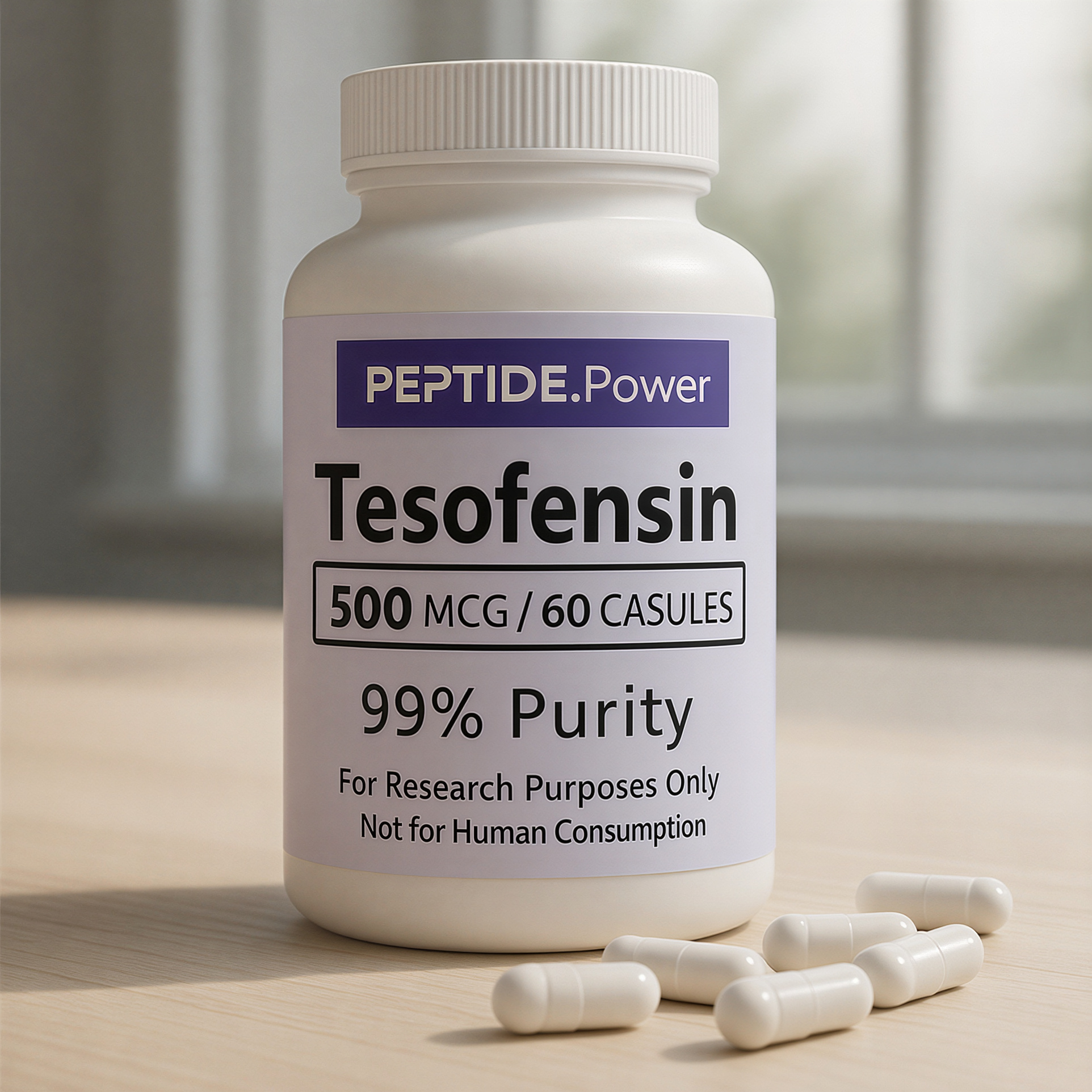



Tesofensin Capsules
$80.99 – $134.99Price range: $80.99 through $134.99
Tesofensin is a synthetic small-molecule monoamine reuptake inhibitor investigated for its effects on appetite regulation, energy expenditure, and body composition. It has been evaluated in clinical and preclinical models for its ability to modulate dopamine, norepinephrine, and serotonin signaling pathways associated with metabolic and neurological research.
Tesofensin Capsules - Triple Monoamine Reuptake Inhibitor & Weight Management Compound
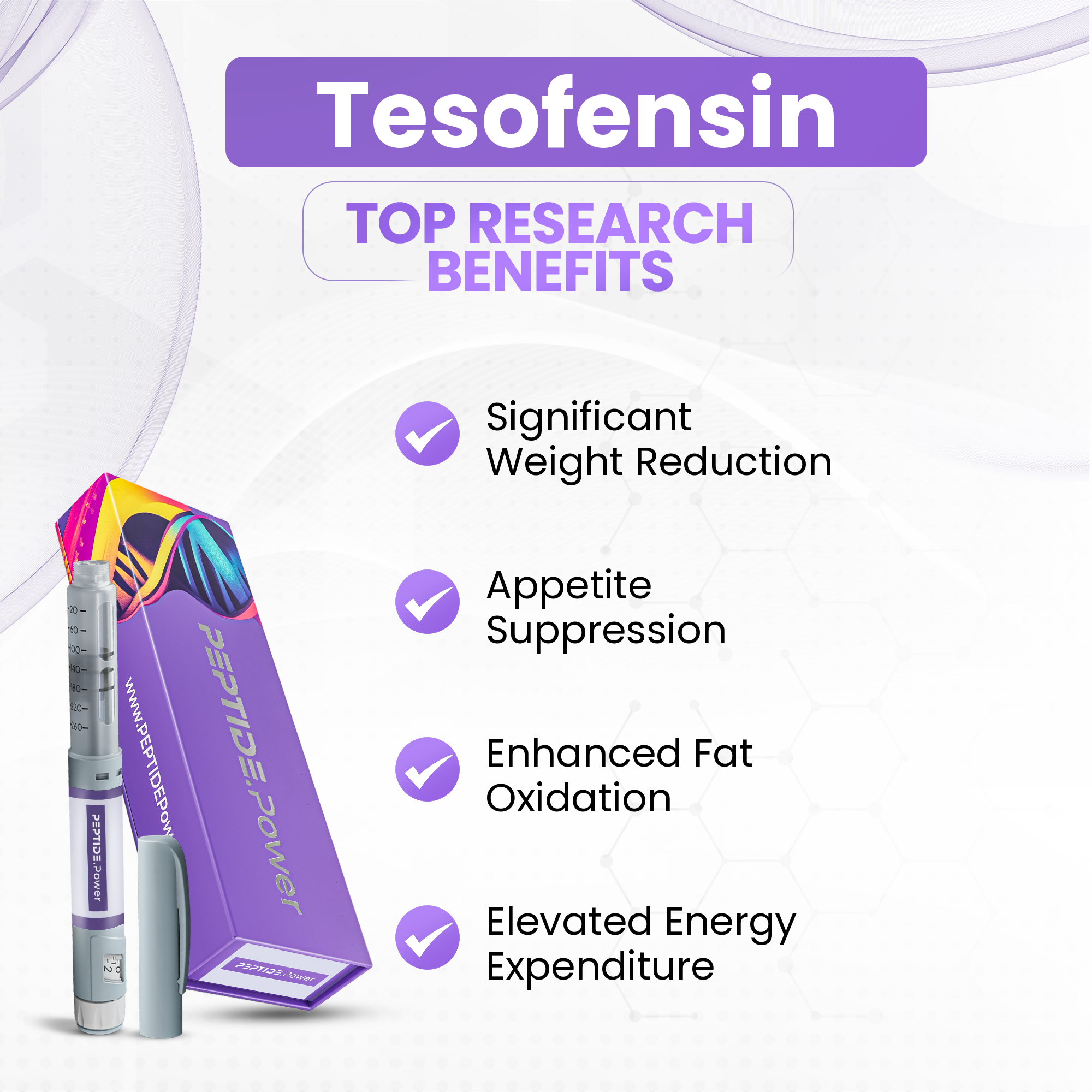
Phase II trials report dose-dependent body weight loss of 6.5% to over 12% across 24 weeks.
Amplifies central satiety signaling and reduces hunger drive via monoamine reuptake inhibition.
Shifts substrate utilization toward lipid oxidation and mobilizes adipose stores in experimental models.
Sympathetic activation increases resting metabolic rate and thermogenesis in research observations.
Clinical research documents reduced fasting glucose and improved insulin sensitivity during administration.
Studies report reductions in circulating triglycerides and LDL cholesterol during treatment protocols.
Dopamine reuptake inhibition studied for effects on motivation, reward processing, and motor function.
Enhances activity in hypothalamic regions governing energy homeostasis and feeding behavior.
Description
Tesofensin is a synthetic small-molecule triple monoamine reuptake inhibitor, originally developed as a candidate for neurodegenerative research and later investigated extensively for its pronounced effects on body weight, appetite regulation, and metabolic activity. It acts on the central nervous system by simultaneously modulating serotonin, dopamine, and noradrenaline signaling pathways.
In experimental models, Tesofensin has been observed to produce significant reductions in food intake, increased resting energy expenditure, and sustained fat mass reduction. Clinical research in obese populations reported weight loss outcomes substantially greater than those seen with single-target monoamine modulators, supporting its position as one of the most potent investigational anti-obesity compounds in this class.
Additional studies have examined Tesofensin for its influence on dopaminergic tone, motivation, and cognitive endpoints, with reported improvements in attention and executive function attributed to enhanced prefrontal monoamine availability.
Supplied as a pre-dosed oral capsule, Tesofensin offers consistent strength per unit and convenient administration in research workflows, with stable dosing across the study window thanks to its long half-life of approximately 9 days.
Clinical Status:
Tesofensin is a research compound evaluated in multiple Phase II clinical trials for obesity and earlier-phase studies in Parkinson’s and Alzheimer’s disease. It is not approved for medical use in the EU or US and remains restricted to experimental and laboratory research.
Evidence type:
Human RCT ✔ | Observational ✔ | Animal ✔ | In vitro ✔ | Regulatory ☐
Mechanism of Action
Tesofensin works by inhibiting the presynaptic reuptake of three key monoamine neurotransmitters: noradrenaline, dopamine, and serotonin. By blocking their transporters in the central nervous system, it prolongs synaptic signaling in pathways that regulate appetite, satiety, and energy expenditure. This triple reuptake inhibition has been linked in research models with reduced food intake, increased thermogenesis, and modulation of hypothalamic feeding circuits.
Benefits
- Significant Body Weight Reduction:
Tesofensin has been investigated in multiple clinical trials for its capacity to produce substantial reductions in body weight in obese subjects. Phase II studies reported dose-dependent decreases ranging from approximately 6.5% to over 12% of baseline body weight across 24-week protocols. This magnitude of effect exceeds outcomes observed with most monoaminergic compounds, positioning Tesofensin as a research compound of particular interest in obesity pharmacology. - Appetite Suppression and Satiety Modulation:
By inhibiting the reuptake of dopamine, noradrenaline, and serotonin, Tesofensin is studied for its ability to amplify central satiety signaling and reduce hunger drive. Research models have observed diminished caloric intake, smaller portion preferences, and prolonged inter-meal intervals. These behavioral changes are linked to enhanced hypothalamic activity in regions governing energy homeostasis. - Enhanced Fat Oxidation and Metabolic Rate:
Tesofensin has been reported to elevate resting energy expenditure and shift substrate utilization toward lipid oxidation. In experimental observations, sympathetic nervous system activation contributes to increased thermogenesis and mobilization of adipose stores. This dual mechanism, combining reduced intake with elevated expenditure, distinguishes it from compounds that act solely on appetite pathways. - Improved Glycemic and Lipid Parameters:
Clinical research has documented favorable changes in metabolic biomarkers during Tesofensin administration, including reductions in fasting glucose, triglycerides, and LDL cholesterol. Improvements in insulin sensitivity have also been observed, often correlating with the degree of fat mass loss. These findings support its investigation as a multi-parameter metabolic modulator rather than a weight-only intervention. - Dopaminergic Activity and Motivational Drive:
Originally developed for neurological indications such as Parkinson’s disease and Alzheimer’s disease, Tesofensin’s dopamine reuptake inhibition has been studied for its effects on motivation, reward processing, and motor function. Research models have noted improvements in volitional activity and engagement, factors that may indirectly support energy expenditure through increased physical activity levels. - Preservation of Lean Mass During Weight Loss:
Unlike caloric restriction alone, which often results in substantial lean tissue loss, Tesofensin studies have observed a more favorable ratio of fat-to-lean mass reduction. The compound’s metabolic profile appears to preferentially target adipose tissue while supporting maintenance of skeletal muscle, an outcome of significant interest in body composition research. - Sustained Pharmacological Activity:
Tesofensin exhibits a notably long elimination half-life of approximately 9 days, allowing for once-daily oral administration and stable plasma concentrations. This pharmacokinetic profile supports consistent monoaminergic tone throughout extended research protocols and reduces variability in observed effects between dosing intervals. - Cardiometabolic Risk Marker Modulation:
Beyond direct weight outcomes, Tesofensin research has reported reductions in waist circumference, blood pressure parameters at lower doses, and inflammatory markers associated with adiposity. These secondary endpoints contribute to its profile as a candidate for studying interventions targeting the broader cluster of obesity-related metabolic dysfunctions.
Research Data
| Study / Model | Reported effect |
|---|---|
| Phase 2 RCT, obese adults (TIPO-1, 24 weeks) | ↓ body weight by 6.5-12.6% at 0.25-1.0 mg/day vs 2.0% placebo |
| Diet-induced obese rats | ↓ food intake and sustained ↓ body weight via central monoaminergic modulation |
| Phase 2 RCT, Parkinson’s disease patients | Unexpected ↓ body weight observed, prompting obesity research pivot |
| In vitro monoamine transporter assays | Inhibition of dopamine, noradrenaline, and serotonin reuptake |
| Obese subjects, metabolic markers | ↑ satiety, ↓ waist circumference, improved lipid profile and insulin sensitivity |
| Long-term rodent feeding models | ↑ resting energy expenditure and ↓ adiposity over extended dosing |
Stack Suggestions
Tesofensin is often combined in research with:
- Tesofensin + 5-Amino-1MQ → Pairs monoamine reuptake inhibition with NNMT blockade to enhance lipolysis and metabolic rate in obesity models.
- Tesofensin + Sеmаglutіdе → Combines central appetite suppression with GLP-1 receptor agonism for compounded weight reduction effects.
- Tesofensin + AOD-9604 → Supports fat oxidation pathways alongside appetite and reward modulation.
- Tesofensin + Тіrzераtіdе → Investigated for synergistic effects on satiety, glucose regulation, and adipose tissue reduction.
⚠ Stacks are for experimental design only; not safety or efficacy guidance.
Capsule Dosage Chart
| Tesofensin 500 mcg – 30 Capsules | |
| Strength | 500 mcg (0.5 mg) per capsule |
| Count | 30 capsules per bottle |
| Standard serving | 1 capsule once daily |
| Total content | 15 mg (30 × 0.5 mg) |
Dosage & Protocols Variations
Standard Research Protocol
- Dose: 0.25 – 0.5 mg
- Duration: 12 – 24 weeks
- Frequency: Once daily (morning)
- Cycle Interval: 4 – 8 weeks off before repeating
- Goal / Description: Baseline dose used in body weight and appetite suppression models.
Therapeutic Research Protocol
- Dose: 0.5 – 1.0 mg
- Duration: 16 – 24 weeks
- Frequency: Once daily (morning)
- Cycle Interval: 8 weeks off before repeating
- Goal / Description: Higher-dose protocol studied for pronounced fat mass reduction and metabolic shifts.
Biohacker Protocol (experimental)
- Dose: 0.125 – 0.25 mg
- Duration: 8 – 12 weeks
- Frequency: Once daily (morning)
- Cycle Interval: 4 weeks off before repeating
- Goal / Description: Microdosing approach explored for monoamine modulation with minimized cardiovascular load.
Possible Side Effects
Tesofensin is generally well-tolerated in short-term clinical and preclinical studies at low to moderate doses.
Reported side effects observed in available research data:
- Mild to moderate increase in heart rate and blood pressure.
- Dry mouth and reduced salivation.
- Insomnia or disturbed sleep patterns, particularly with evening dosing.
- Nausea, constipation, or transient gastrointestinal discomfort.
- Mood changes, restlessness, or mild anxiety in sensitive subjects.
- Headache and occasional dizziness during initial dosing.
Effects appear to be dose-dependent, with higher doses associated with greater cardiovascular and central nervous system stimulation. No evidence of severe hepatic, renal, or hematologic adverse effects has been observed in available short-term data.
Product Attributes
- CAS #: 402856-42-2
- Molecular Formula: C17H23Cl2NO
- Sequence (AA): N/A (small-molecule monoamine reuptake inhibitor)
- Molecular Weight: 328.28 g/mol
- PubChem CID: 11370864
- Half-Life: ~220 hours
- Synonyms: NS2330, Tesofensine
- Type: Synthetic small-molecule triple monoamine reuptake inhibitor
- Research Focus: Weight Loss & Metabolism, Cognition & Neurology
Scientific References
- Astrup A, Madsbad S, et al. Effect of tesofensine on bodyweight loss, body composition, and quality of life in obese patients: a randomised, double-blind, placebo-controlled trial. Lancet. 2008.
- Axel AM, Mikkelsen JD, Hansen HH. Tesofensine, a novel triple monoamine reuptake inhibitor, induces appetite suppression by indirect stimulation of alpha1 adrenoceptor and dopamine D1 receptor pathways in the diet-induced obese rat. Neuropsychopharmacology. 2010.
- Appel L, Bergström M, et al. Tesofensine, a novel triple monoamine re-uptake inhibitor with anti-obesity effects: dopamine transporter occupancy as measured by PET. Eur Neuropsychopharmacol. 2014.
- Gilbert JA, Gasteyger C, et al. The effect of tesofensine on appetite sensations. Obesity (Silver Spring). 2012.
- Bello NT, Zahner MR. Tesofensine, a monoamine reuptake inhibitor for the treatment of obesity. Curr Opin Investig Drugs. 2009.
References are provided for research orientation only and describe preclinical or experimental work.
Included In The Box
Every order arrives in a premium, custom-designed PEPTIDE.Power box, engineered for convenience, hygiene, and safe storage. Inside, you will find everything needed for your full research protocol:
- 1× Sealed bottle of capsules, tamper-evident and ready to use — no preparation required
- Desiccant pack included to keep the capsules dry and stable
- Internal Stabilizing Foam Insert to protect the bottle during transport
- Instruction Panel printed on the inside of the box for quick reference
- Security Seal Sticker ensuring the package has not been opened or tampered with
Storage
Store the bottle in a cool, dry place away from direct light, and keep it tightly closed between uses. No refrigeration is required.
Avoid exposure to heat, humidity, and repeated temperature changes to preserve potency. Keep the desiccant pack inside the bottle.
For best results, use the product consistently within the recommended time window and always follow your research protocol.
Delivery
We ship with Next-Day EU Delivery via DHL Express or UPS Express.
All orders are prepared fresh on the day of dispatch, placed in EPS Cold-Chain Transport Boxes, and shipped with cooling elements to maintain a stable temperature throughout the journey.
Our logistics process is designed so the package arrives overnight, avoiding customs delays inside the European Union.
Products are shipped from our EU facility, ensuring no import duties, no customs clearance, and always fast and secure delivery.
Payment
Due to the nature of research peptides and the high-risk category assigned by payment processors, credit card companies do not generally support merchants in this field.
For this reason, we accept mainly Bank Transfers.
We also work with a crypto payment provider, and from time to time, card payments may be available depending on processor availability.
Within the European Union, SEPA transfers are fast, low-cost, and usually arrive within minutes to a few hours, making the payment process smooth and simple.
Once the transfer is received, your order is prepared immediately and dispatched the same day, depending on the daily cut-off time.
Please note that we do not dispatch shipments on Fridays or on days before official public holidays. This is done to ensure that parcels can be delivered on the next working day and are not held in transit over weekends or holidays.
This method ensures compliance, security, and continuity of service for all customers across the EU.
Didn't find the answer to your question?
View all frequently asked questionsRELATED PRODUCTS


5-Amino-1MQ


GHRP-6


HGH Frag (176-191)


Mazdutide

