

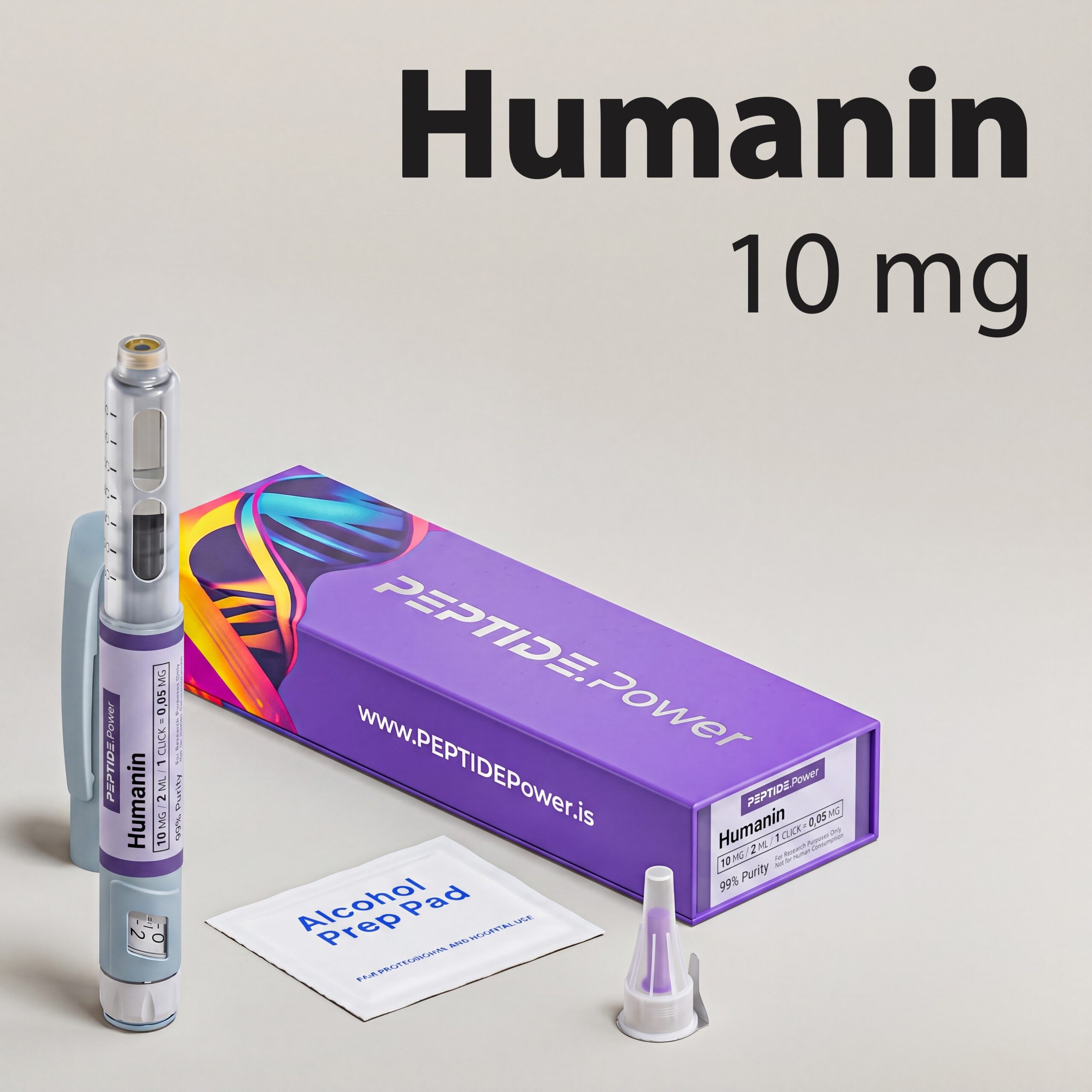


Humanin
Humanin is a mitochondrial-derived peptide encoded within the 16S rRNA region of mitochondrial DNA, studied for its cytoprotective and anti-apoptotic properties. It has been investigated in models of neurodegeneration, metabolic dysfunction, and cellular stress, with research highlighting its role in mitochondrial signaling and longevity-related pathways.
$134.99
Temporarily unavailable. Leave your details and we will let you know the moment it is back.
Humanin - Mitochondrial-Derived Cytoprotective Peptide
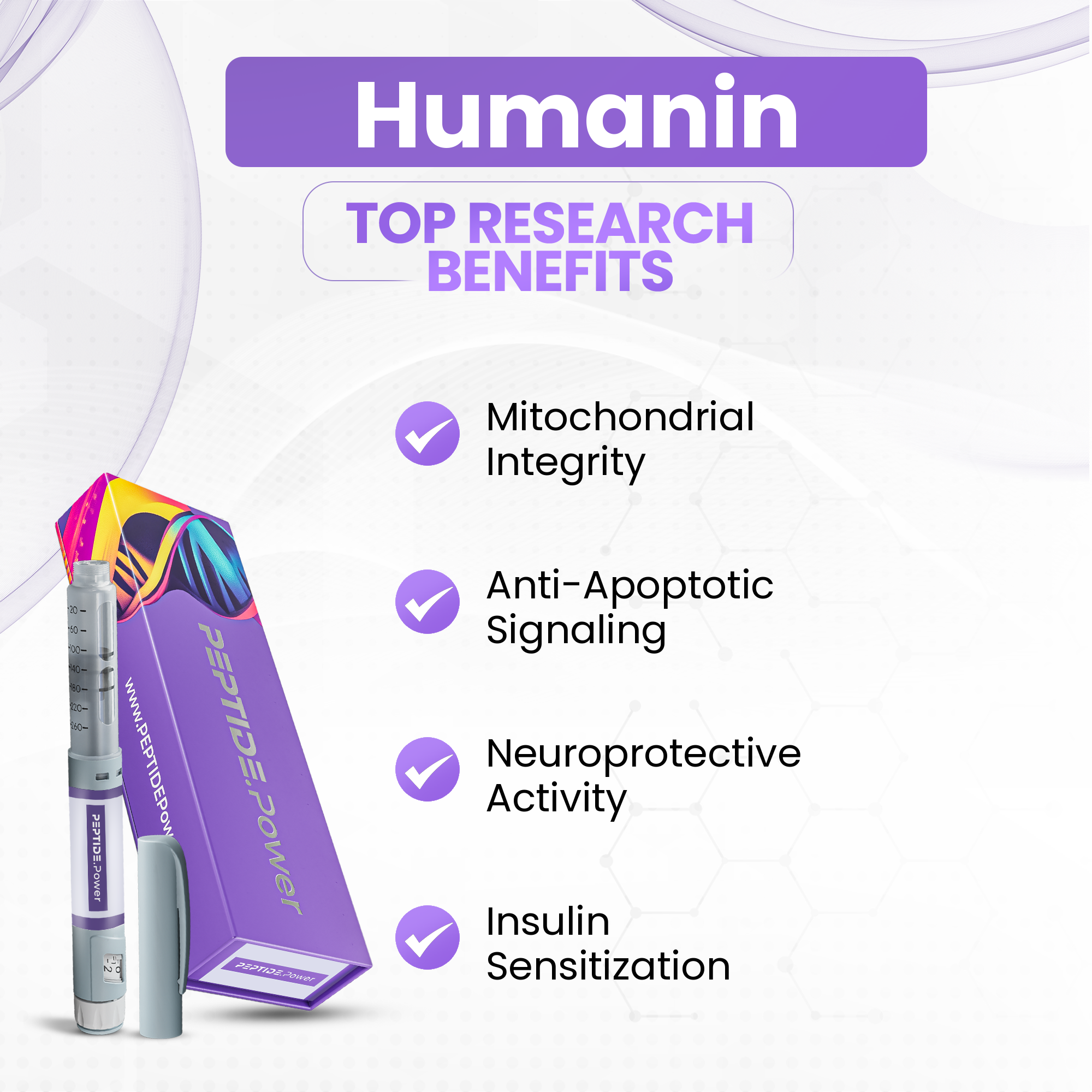
Stabilizes inner membrane potential and supports ATP output under oxidative and metabolic stress.
Interferes with Bax-mediated apoptosis, limiting mitochondrial outer membrane permeabilization in distressed cells.
Attenuates amyloid-beta toxicity and neuronal death in Alzheimer's-related cellular and rodent models.
Improves insulin sensitivity and hypothalamic glucose sensing in metabolic animal models.
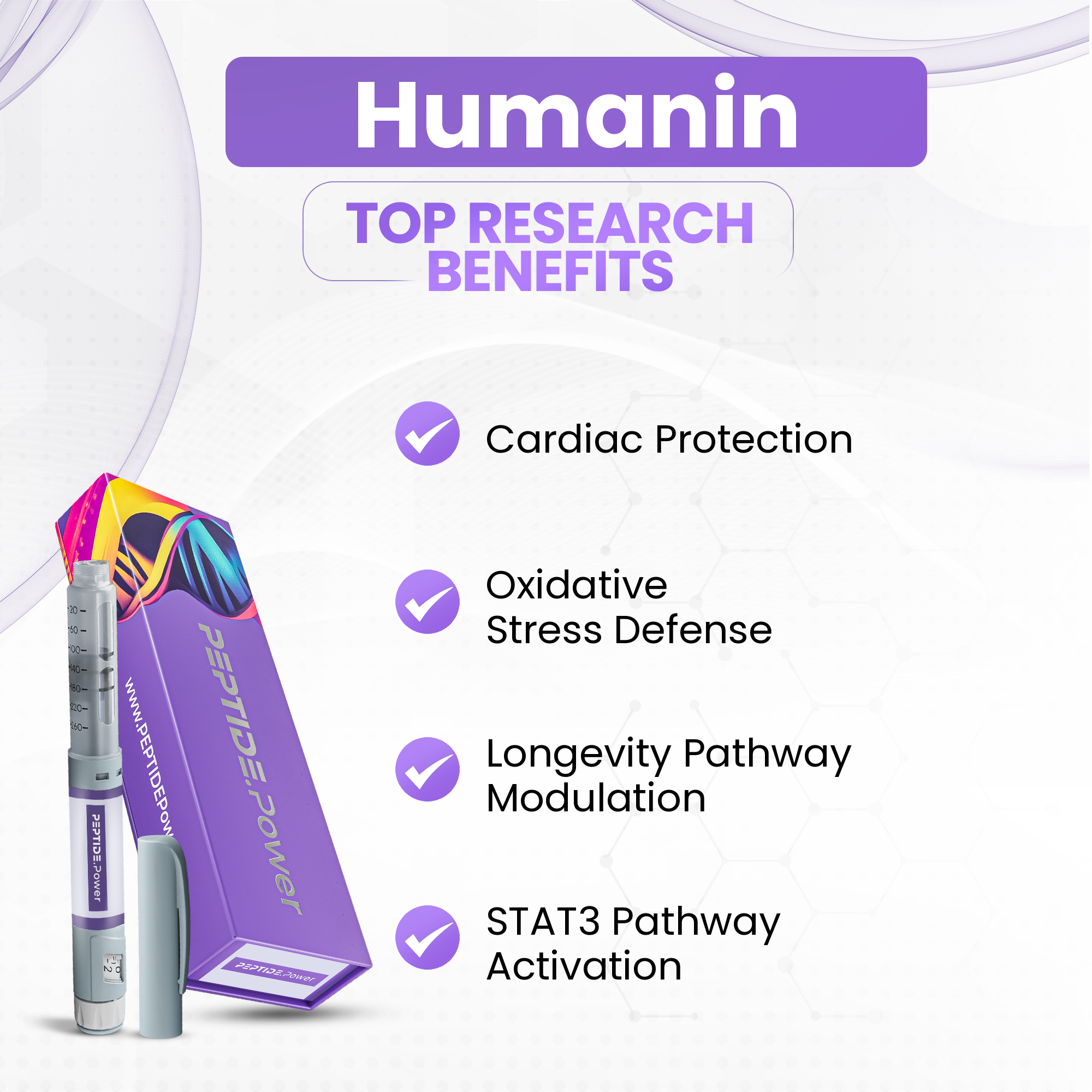
Reduces infarct size and myocardial oxidative damage in ischemia-reperfusion research models.
Mitigates reactive oxygen species accumulation and preserves redox balance in stressed cellular systems.
Investigated within mitochondrial signaling and aging pathways linked to bioenergetic decline.
Engages STAT3 cascade and IGFBP-3 interactions implicated in cytoprotection and metabolic regulation.
Description
Humanin is a 24-amino-acid mitochondrial-derived peptide (MDP) encoded within the 16S ribosomal RNA gene of mitochondrial DNA. It is studied for its cytoprotective, anti-apoptotic, and metabolic-modulating properties across neuronal, cardiovascular, and endocrine research models.
In experimental settings, Humanin has been observed to inhibit Bax-mediated apoptosis, suppress mitochondrial cytochrome c release, and protect cells from oxidative stress and amyloid-beta toxicity. It is reported to interact with the FPR2 and CNTFR/WSX-1/gp130 receptor complexes, activating downstream STAT3 and ERK signaling pathways linked to cellular survival.
Additional research highlights Humanin’s role in insulin sensitization, lipid metabolism, and neuroprotection, particularly in models of Alzheimer’s disease, ischemic injury, and age-related metabolic decline. Declining endogenous Humanin levels with age have made it a focus of longevity and mitochondrial communication research.
Supplied in a pre-mixed, ready-to-use pen, Humanin is intended for subcutaneous research administration under controlled laboratory conditions.
Clinical Status:
Humanin is a research peptide evaluated extensively in animal models and in vitro systems for neuroprotection, metabolic regulation, and apoptosis modulation. It is not approved for medical use and remains restricted to experimental and laboratory research.
Evidence type:
Human RCT ☐ | Observational ✔ | Animal ✔ | In vitro ✔ | Regulatory ☐
Mechanism of Action
Humanin exerts its cytoprotective effects by binding to the heterotrimeric receptor complex formed by FPR2/3, CNTFR, WSX-1, and gp130, activating STAT3 and ERK1/2 signaling pathways. It also interacts intracellularly with pro-apoptotic Bax and BimEL proteins, inhibiting mitochondrial apoptosis. This dual extracellular and intracellular activity supports neuronal survival, metabolic regulation, and oxidative stress resistance in experimental models.
Benefits
- Mitochondrial Function Support:
Humanin is studied for its capacity to preserve mitochondrial integrity under metabolic and oxidative stress. Research models indicate stabilization of the inner membrane potential, reduced cytochrome c release, and improved ATP output in stressed cells. This mitochondrial-protective profile has positioned Humanin as a model peptide for investigating age-related bioenergetic decline and cellular fatigue mechanisms. - Cytoprotective and Anti-Apoptotic Activity:
Humanin has been observed to interfere with the Bax-mediated apoptotic pathway, preventing premature mitochondrial outer membrane permeabilization in distressed cells. In experimental models, this translates into reduced neuronal and cardiomyocyte loss following ischemic or toxic insult. Researchers commonly use Humanin as a reference compound for studying intrinsic apoptosis regulation and cell survival signaling. - Neuroprotective Research Applications:
A major research focus for Humanin is its protective effect against amyloid-beta toxicity in neuronal cell models. Studies have reported attenuated neuronal death, reduced oxidative damage, and preserved synaptic markers in cultures and rodent models exposed to neurodegenerative stressors. This profile makes Humanin a central peptide in investigations of Alzheimer’s-related pathology and broader cognitive decline mechanisms. - Metabolic and Insulin Sensitivity Modulation:
Humanin is investigated for its influence on glucose homeostasis and insulin signaling. Animal models have shown improved insulin sensitivity, enhanced hypothalamic glucose sensing, and reduced hepatic glucose output following administration. Research suggests interaction with IGF-binding protein 3 (IGFBP-3) and downstream metabolic regulators, supporting its role as a candidate in metabolic syndrome and diabetes-related research models. - Cardiovascular Tissue Protection:
In cardiac ischemia-reperfusion models, Humanin has been reported to reduce infarct size and limit oxidative damage in myocardial tissue. Mechanistic data point to activation of the STAT3 signaling cascade and preservation of endothelial function. These observations have made Humanin a recurring subject in cardioprotective and vascular aging research programs. - Anti-Inflammatory Signaling:
Humanin has been shown in models to attenuate pro-inflammatory cytokine release, including TNF-α and IL-6, in stressed macrophages and tissue cultures. By modulating mitochondrial-derived inflammatory signaling and damage-associated molecular patterns, it appears to support a more balanced immune response. This makes it relevant to research on chronic low-grade inflammation and inflammaging. - Longevity and Cellular Aging Research:
As a mitochondrial-derived peptide, Humanin is studied as a biomarker and modulator of biological aging. Observational data in humans show declining circulating Humanin levels with age, while higher levels correlate with markers of healthy longevity in centenarian cohorts. Researchers use it to investigate mitonuclear communication and the role of peptide signaling in lifespan regulation. - Stress Resistance and Cellular Homeostasis:
Humanin has been reported to enhance cellular resilience against a range of stressors, including oxidative stress, hypoxia, and serum starvation. In vitro studies show preserved viability and reduced reactive oxygen species accumulation in challenged cells. This broad cytoprotective signature supports its use as a tool compound in research on cellular adaptation and stress-response pathways.
Research Data
| Study / Model | Reported effect |
|---|---|
| Alzheimer’s disease cellular models | ↓ neuronal apoptosis induced by amyloid-beta toxicity; preserved cell viability |
| Aged mouse models | ↑ insulin sensitivity; improved glucose homeostasis and metabolic markers |
| Ischemia-reperfusion (cardiac models) | ↓ infarct size; cardioprotection via STAT3 signaling activation |
| In vitro mitochondrial assays | ↑ mitochondrial respiration and ATP production; reduced oxidative stress |
| Human centenarian observational data | Higher circulating humanin levels correlated with longevity and metabolic health |
| Optic nerve injury models | Retinal ganglion cell survival enhanced; neuroprotective signaling preserved |
| Atherosclerosis rodent models | ↓ plaque formation; reduced vascular inflammation markers |
Stack Suggestions
Humanin is often combined in research with:
- Humanin + MOTS-c → Synergistic mitochondrial-derived peptide pairing for metabolic regulation and cellular bioenergetics.
- Humanin + Epitalon → Combines cytoprotective signaling with telomerase modulation in longevity research models.
- Humanin + NAD+ → Supports mitochondrial function and cellular energy homeostasis in aging studies.
- Humanin + SS-31 → Enhances mitochondrial protection and reduces oxidative stress in experimental models.
⚠ Stacks are for experimental design only; not safety or efficacy guidance.
Pen Dosage Chart
| Humanin Pen 10 mg | |
| Volume | 2 mL |
| mg/mL | 5 mg/mL |
| Click-to-Dose | 1 click = 0.05 mg |
| Example(s) | 10 clicks = 0.5 mg |
Dosage & Protocols Variations
Standard Research Protocol
- Dose: 1 – 5 mg
- Duration: 4 – 8 weeks
- Frequency: Daily or every other day
- Cycle Interval: 4 weeks off before repeating
- Goal / Description: Baseline protocol for mitochondrial and metabolic research models.
Therapeutic Research Protocol
- Dose: 5 – 10 mg
- Duration: 6 – 12 weeks
- Frequency: Daily
- Cycle Interval: 4 – 6 weeks off before repeating
- Goal / Description: Higher-dose protocol for neuroprotection and insulin sensitivity studies.
Biohacker Protocol (experimental)
- Dose: 0.5 – 1 mg
- Duration: Continuous
- Frequency: Daily microdose
- Cycle Interval: 2 weeks off every 8 weeks
- Goal / Description: Low-dose continuous use in longevity and cellular stress models.
Possible Side Effects
Humanin is generally well-tolerated in preclinical and limited human studies, with no major adverse effects reported at research doses.
Observed effects in experimental models are rare and typically mild:
- Transient injection site irritation or redness.
- Mild headache or dizziness during initial dosing.
- Occasional fatigue or drowsiness in early administration phases.
- Minor gastrointestinal discomfort in sensitive subjects.
No evidence of hormonal, hepatic, or cardiovascular adverse effects has been observed in available data. Long-term safety profiles in humans remain under investigation, and Humanin is restricted to experimental and laboratory research.
Product Attributes
- CAS #: 330936-69-1
- Molecular Formula: C112H184N28O30S2
- Sequence (AA): MAPRGFSCLLLLTSEIDLPVKRRA
- Molecular Weight: 2438.0 g/mol
- Half-Life: ~30 minutes (native); extended in analogs such as HNG
- Synonyms: HN, MT-RNR2 peptide, Rattin (rat homolog), HNG (S14G-Humanin analog)
- Type: Mitochondrial-derived peptide (MDP), cytoprotective signaling factor
- Research Focus: Neuroprotection & Longevity, Metabolic Health, Cellular Stress Resistance
Scientific References
- Humanin: a harbinger of mitochondrial-derived peptides? Observational | Animal | In vitro
- Humanin peptide suppresses apoptosis by interfering with Bax activation In vitro
- Humanin: a novel central regulator of peripheral insulin action Animal | In vitro
- Humanin protects against Alzheimer’s disease-relevant insults in vitro and in vivo Animal | In vitro
- The mitochondrial-derived peptide humanin protects RPE cells from oxidative stress, senescence, and mitochondrial dysfunction In vitro
- Naturally occurring variation in the mitochondrial-derived peptide MOTS-c and the risk of type 2 diabetes Observational
- Humanin reduces cardiac ischemia-reperfusion injury via STAT3 signaling Animal
- Humanin and other mitochondrial-derived peptides: bioactive molecules with significant role in healthspan and lifespan Observational | Animal | In vitro
Included In The Box
Every product arrives in a premium, custom-designed PEPTIDE.Power box, engineered for convenience, hygiene, and safe storage in your refrigerator. Inside, you will find everything needed for your full research protocol:
- 1× Disposable Pre-Mixed Injection Pen
- Powered by our proprietary PSM Technology™: precision stabilization & mixing system for consistent potency
- 10× Ultra-thin Needles (33G, 4 mm)
- 10× Alcohol Pads for sterile preparation
- Internal Stabilizing Foam Insert to prevent shaking during transport
- Instruction Panel printed on the inside of the box for quick reference
- Security Seal Sticker ensuring the package has not been opened or tampered with
Storage
Store the product in a refrigerator at 1-8°C immediately upon delivery. To maintain optimal stability, keep the pen away from light, and do not expose it to repeated temperature changes.
Once reconstituted (all our pens come pre-mixed), research compounds remain stable for 6-8 weeks under proper refrigeration.
Do not freeze after reconstitution. Always keep the box closed so the pen, needles, and alcohol pads stay clean and protected.
For best results, use the product consistently within the recommended time window and always follow your research protocol.
Delivery
We ship with Next-Day EU Delivery via DHL Express or UPS Express.
All orders are prepared fresh on the day of dispatch, placed in EPS Cold-Chain Transport Boxes, and shipped with cooling elements to maintain a stable temperature throughout the journey.
Our logistics process is designed so the package arrives overnight, avoiding customs delays inside the European Union.
Products are shipped from our EU facility, ensuring no import duties, no customs clearance, and always fast and secure delivery.
Payment
Due to the nature of research peptides and the high-risk category assigned by payment processors, credit card companies do not generally support merchants in this field.
For this reason, we accept mainly Bank Transfers.
We also work with a crypto payment provider, and from time to time, card payments may be available depending on processor availability.
Within the European Union, SEPA transfers are fast, low-cost, and usually arrive within minutes to a few hours, making the payment process smooth and simple.
Once the transfer is received, your order is prepared immediately and dispatched the same day, depending on the daily cut-off time.
Please note that we do not dispatch shipments on Fridays or on days before official public holidays. This is done to ensure that parcels can be delivered on the next working day and are not held in transit over weekends or holidays.
This method ensures compliance, security, and continuity of service for all customers across the EU.
Didn't find the answer to your question?
View all frequently asked questionsRELATED PRODUCTS


ARA-290 (Cibinetide)


CJC 1295 (No DAC)


CJC-1295 (No-DAC) + Ipamorelin


Mazdutide

